


Somewhere in the last thirty years, we agreed to start measuring everything. Nobody announced it. There was no meeting. It arrived the way the most consequential changes always arrive — one reasonable decision at a time, each defensible on its own, until the aggregate had quietly become the thing we mistook for strategy.
OKRs. KPIs. Attribution modelling. A/B testing. Quarterly earnings. The 90-day plan. Small bets. Iterative testing. Fail fast. I’ve used all of them. I’d defend most of them in the room they were designed for. Individually, each is a sensible response to a real problem: how do you know if the thing you’re doing is working?
But look at what they add up to. We have built a culture that optimises for what it can count, and we have called that optimisation strategy. And the two are not the same thing. They were never the same thing.
The problem isn’t the measuring. The problem is what the measuring quietly trained us to stop doing.
Here is the mechanism, and it’s worth being precise about it, because it’s the reason intelligent people in well-run organisations keep producing safe, defensible, forgettable work and can’t quite explain why.
The data infrastructure we’ve built is exquisitely good at one thing: reading trends. It tells you where you are. It tells you whether the line is going up or down, and how fast, and compared to what. This is genuinely useful. It is also the entire problem, because the gains that actually matter don’t arrive as trends.
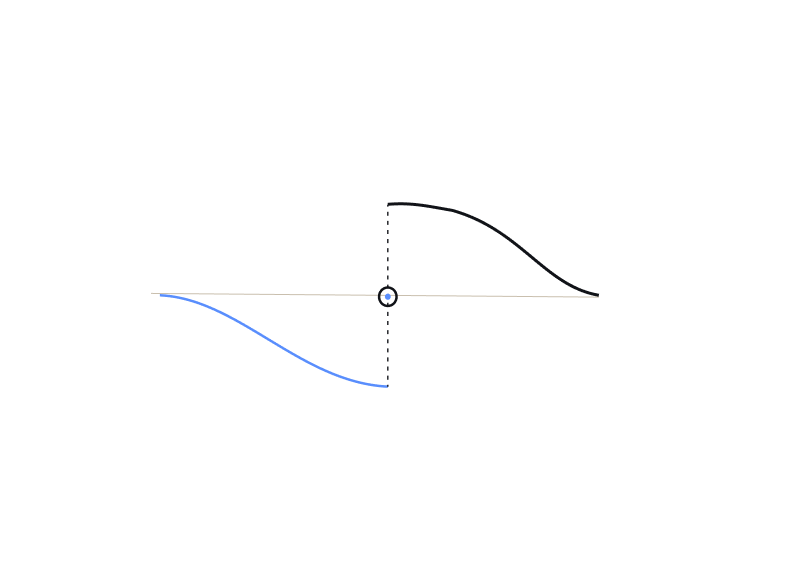
They arrive as step changes.
Think about anything you’ve ever genuinely got good at. Learning to ride a bike. A language. A sport. The work you’re best at now. It didn’t improve on a smooth gradient. There were long flat stretches where nothing visible happened, where every measurement you could have taken would have said no progress, consider stopping — and then, on no particular day, a jump. The thing that was impossible last week is suddenly available. Not gradually. All at once.
The flat stretch wasn’t the absence of progress. It was the accumulation that the step change required. But here’s the cruelty of it: from inside the flat stretch, and on every dashboard measuring it, the accumulation is invisible. The flat period looks exactly like stagnation. The step change, when it finally registers, looks like a spike that next quarter’s data will smooth away.
So a system optimised to read trends does something quietly catastrophic. It is structurally built to abandon the flat period — to redirect the resource, kill the initiative, declare the experiment failed — at precisely the point just before the threshold it was trying to reach. It optimises away the exact discomfort that produces the thing it was measuring for.
This is reductionism dressed as rigour.
It feels safe, because it is safe. Every decision is defensible. Every number is real. Nobody gets fired for hitting the quarterly target or for killing the underperforming bet on schedule. The whole apparatus produces a continuous, reassuring sense that something rigorous is happening.
And it is safe precisely because nothing is actually being reached.
The genuine reach — the bet that takes two years to pay, the capability you can’t measure until you already have it, the new ground that looks like a downward move to everyone watching — never survives contact with a system built to read trends. It can’t. It has no trend to show for itself until it’s already done, and by then the system has long since defunded it in the name of discipline.
We didn’t lose our ambition because we got lazy or soft or distracted. We lost it because we built instruments that could only see the measurable, and then we trusted the instruments more than we trusted ourselves. The ambition didn’t register on them. So we stopped reaching, and called the not-reaching prudence.
I want to be careful here, because this is not an argument for throwing out the dashboards and reaching blindly at everything. The unmeasured swing-for-the-fences of a certain kind of 1990s ambition had the right instinct and no mechanism — and it broke a lot of things. The answer isn’t less rigour. It’s rigour pointed at the right thing.
Which means understanding the difference between a reading instrument and a reaching instrument. The data tells you where you are. It is very good at that, and you should keep it. What it cannot do — what it is constitutionally incapable of doing — is tell you where to go, or hold its nerve through the flat period while you get there. That part was never the dashboard’s job. We just forgot we’d handed it a job it couldn’t do.
The anxiety a lot of people are feeling right now — the sense that the frameworks aren’t working, that the careful management of measurable things has produced organisations and careers that are highly optimised and somehow going nowhere — is partly the cost of this. Thirty years of optimising for the countable has left a lot of capable people with no map for what to do when the countable runs out.
That map is what I’m interested in. Not abandoning the measuring. Reframing ambition back to where it belongs — pointed at the step change, equipped with some understanding of why the flat period is necessary rather than a failure, and held steady when the dashboard, doing exactly what it was built to do, says stop.
That’s what this is going to be about. It starts here, with naming the trap, because you can’t climb out of something you can’t see.
More next week.
If this landed, send it to the one person you know who’s running a brilliant dashboard and quietly going nowhere. That’s how this travels.
The Strategic Hedonist · thestrategichedonist.com
Speaking of Reach, I can see the outlines of your future TED Talk.