


I’d been working in advertising for fifteen years. One of the most exciting creative industries. I was beyond bored. Working at a great agency, with great people, on one of the UK’s most recognised brands - ninety-seven percent recognition of the TV advertising. Things had become too comfortable and too predictable. I wasn’t going to last.
At the same time Social was arriving. From the viewpoint of traditional media it made no sense. So the agency sent us on a course. HyperIsland. They taught us how to make a social media campaign. They just didn’t explain why. There was no communication objective. Just be on Social or be left behind.
Two colleagues, Ant and Lloyd, had become experts in social media at EMI records, building fan bases for bands. They took the same thinking to businesses and set up Outsideline. They asked me to join them to develop strategy. I said yes.
The fear was of stepping down. That’s how the move was read in the industry. You don’t move to smaller budgets. You don’t move out from behind the TV screen. Going to Social was, in the eyes of every peer I had, a downward move.
Social was nothing but questions. And I loved it. The TV ad I’d been working on had an eight-month gestation. The first social campaign had a feedback loop measured in hours. I moved to real time overnight.
The fear wasn’t of failure. It was of irrelevance - of having traded a legible position for an illegible one. That fear is the signal this post is about.
Reading it accurately required asking a question the fear itself didn’t prompt: not what am I risking, but what is the fear pointing at?
What it was pointing at was this. Social wasn’t going away. The channel was unestablished but the direction was legible. The question wasn’t whether it would matter. It was whether someone would build the intellectual infrastructure - the strategic models, the measurement frameworks - that would make it matter on terms that lasted.
The fear of moving into new ground was the signal that the new ground was new. That nobody had built the map yet. That the person who built it first would be operating at the productive edge of a domain about to become the most significant channel in the industry.
Outsideline was acquired by Saatchi and Saatchi two and a half years after the move. Toyota Europe. Visa Europe. Global clients, brought into social using frameworks built in the early days when the fear of irrelevance was most present and most rational.
The fear was the signal. The signal was accurate. Following it was the most rational thing available. Not despite the discomfort it pointed toward, but because of it.
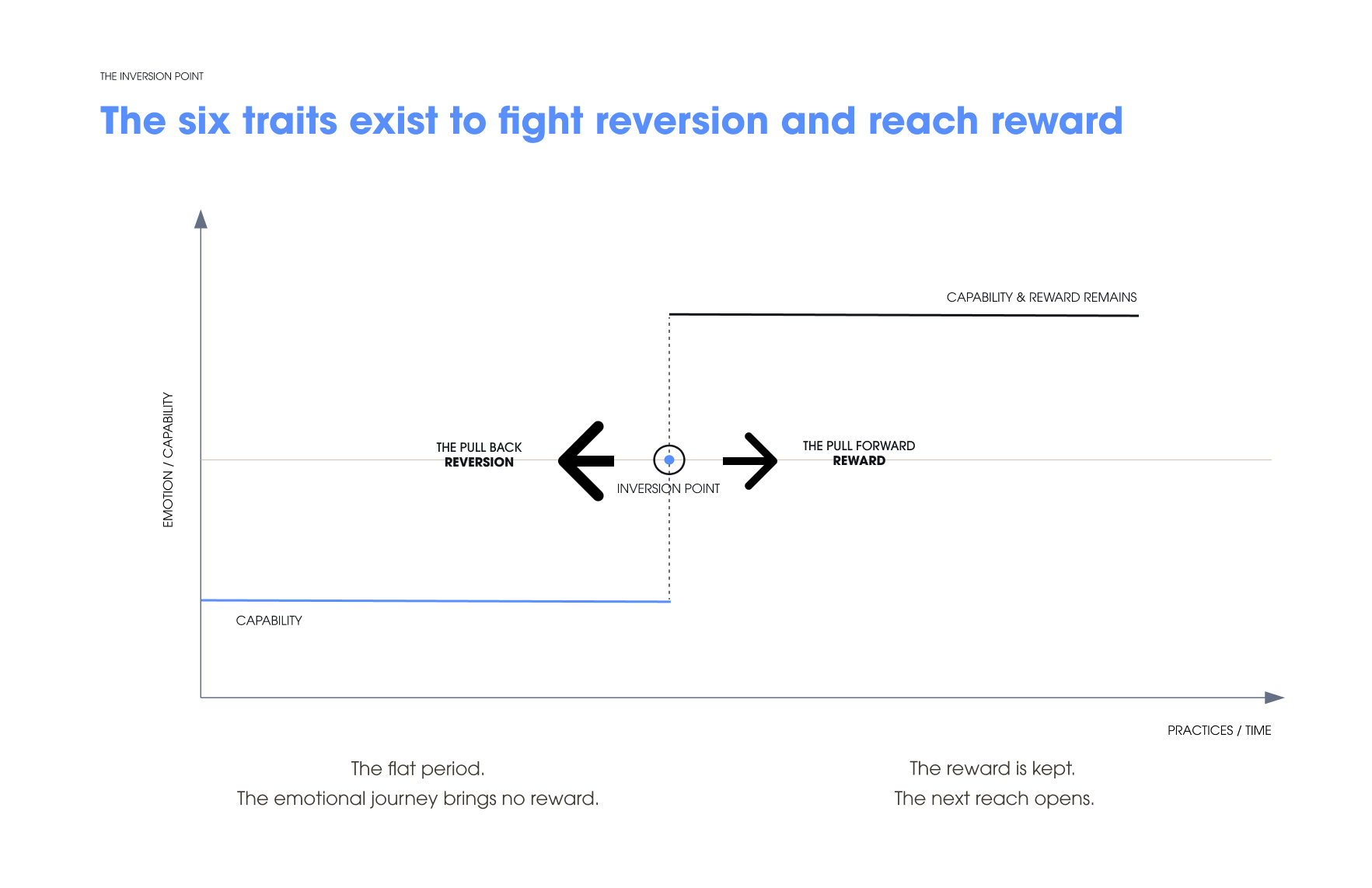
The closer the fear, the closer the edge. The closer the edge, the closer the Inversion Point. Move toward it.